
The Corporate Hijacking of the Global Imagination
There are marketing campaigns, there are brand restructurings, and then there is the permanent alteration of the global cultural fabric. When we evaluate case studies on Brand Equity (the intrinsic value of a brand) through a high-impact business lens, Coca-Cola is not merely a carbonated beverage company; it is a corporation specialized in colonizing the collective unconscious.
To grasp the architectural genius orchestrated in Atlanta during the 1930s, one must strip away the layers of romanticism and view the movement through a cold, analytical perspective of Behavioral Economics. The indivisible association between Coca-Cola and Christmas represents the most successful and enduring application of Classical Conditioning recorded in modern capitalism. The company did not invent the holiday, but it permanently acquired the monopoly over its visual representation.
The Founding Myth and Brand Identity
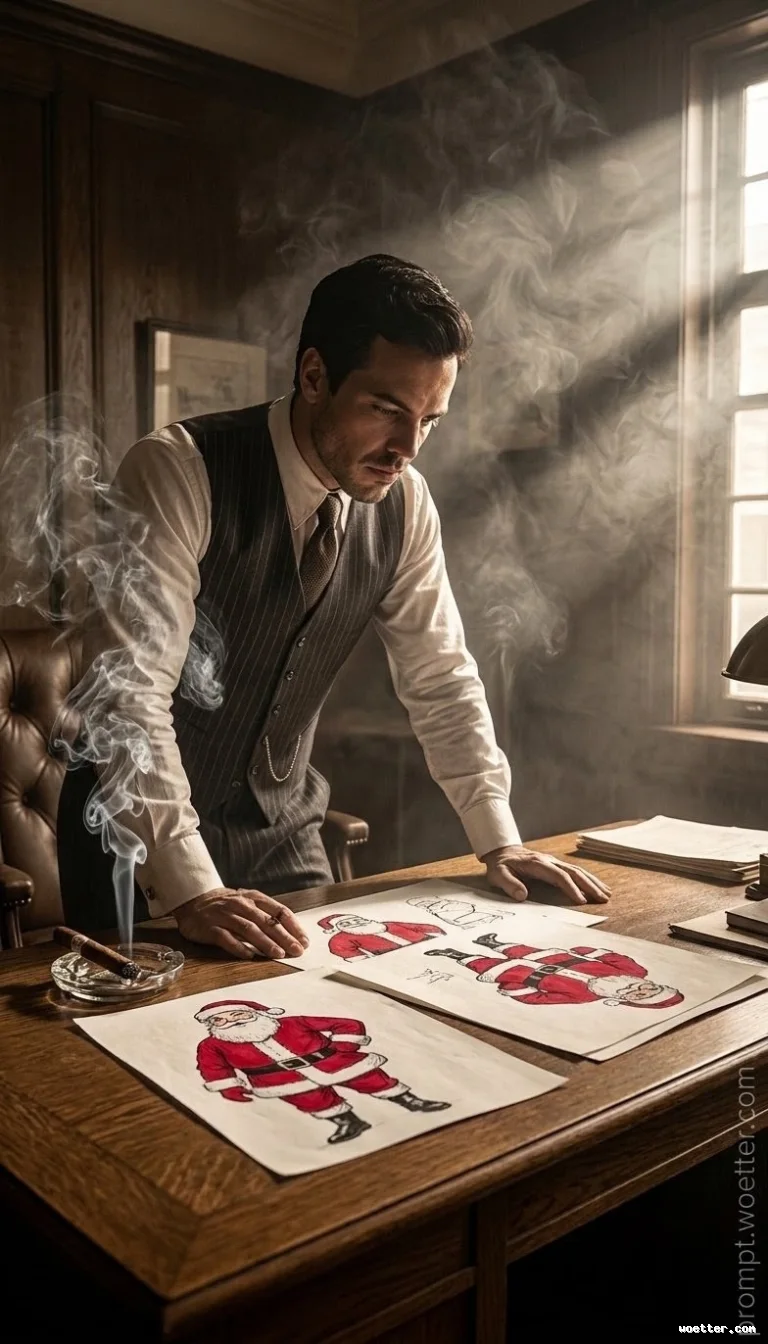
Before Coca-Cola's corporate intervention, the representation of Saint Nicholas (or Santa Claus) was chaotic and decentralized. Depending on geography and folkloric heritage, the figure oscillated between a stern bishop, a thin gnome, or a pagan entity wearing green, blue, or brown robes. A cohesive Brand Identity was nonexistent.
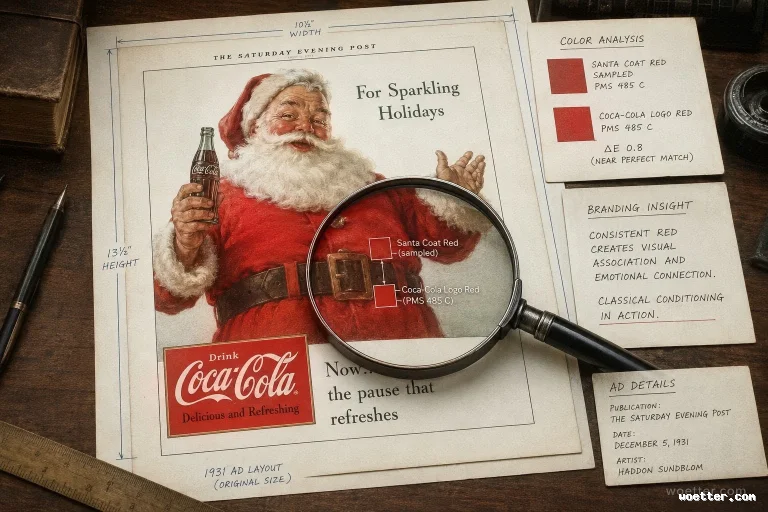
In 1931, executive Archie Lee of the D'Arcy Advertising Agency faced a brutal seasonality problem: soda sales plummeted during the northern hemisphere's winter. The corporate mandate was to forge a behavioral Moat (Economic Moat) that would justify the consumption of a cold beverage in December.
The hiring of illustrator Haddon Sundblom was not mere artistic commission; it was a calculated execution of social engineering. Sundblom formatted a human, robust, rosy-cheeked Santa Claus, who non-accidentally wore exactly the brand's corporate color palette: red and white. This was the breaking point. The corporation was tethering its visual signature to the universal emotion of generosity and family.
Classical Conditioning on an Industrial Scale
In behavioral psychology, Classical Conditioning, discovered by Ivan Pavlov, involves pairing a neutral stimulus with an unconditioned stimulus to elicit a conditioned response.
Coca-Cola utilized the figure of Santa Claus (the unconditioned stimulus generating affection) and systematically paired it with its glass bottle (the neutral stimulus). Through decades of relentless exposure and intensive capital deployment, the neurological pairing occurred. Today, in the cortex of billions of individuals, a specific red hue and the concept of familial joy are neurologically intertwined with the brand. Exhaustive repetition generated the Mere Exposure Effect, where continuous familiarity consolidates an irrational preference for the product over competitors.
Asset Engineering and Brand Equity
By establishing Santa Claus in brand colors as the global standard, Coca-Cola executed a masterstroke in psychological licensing. They do not have to pay royalties for the image of Santa Claus, yet the entire world consumes their corporate version. Every time a retailer, movie, or competitor displays a red-and-white Santa, they are inadvertently strengthening the synapses associated with Coca-Cola. It is a form of reverse Freeriding.
This level of Brand Equity acts as an impenetrable shield against market fluctuations and price elasticity. The consumer is not pricing the carbonated water and syrup; they are pricing the deep-rooted emotional heritage.
Seasonality as an Economic Moat: The GEO Block
The strategy operated distinctly when analyzed across global geography, adapting the Choice Architecture to hemispheric peculiarities. In the United States (Northern Block), the messaging relied on the thermal comfort of the fireplace, the "Pause That Refreshes" for the hard-working Santa. It was a direct solution to the winter sales collapse.
Upon expanding to Latin America and Australia (Southern Block), where Christmas is scorching hot, the company leveraged product architecture. The emphasis shifted from rigid folkloric narrative to the immediate physical refreshment of a sweating bottle, utilizing the exact same Sundblom iconography. Regardless of local climate, the visual anchor of corporate red remained immutable. Geography dictates the trigger of need (cold vs. heat), but the neurological resolution provided is invariably the same brand.
Conclusion: Dominating the Unconscious
The invention of the modern Santa Claus by Coca-Cola is not a heartwarming holiday tale. It is the most definitive masterclass in Corporate Strategy and Behavioral Economics. It proves that elite brands do not respond to culture; they manufacture it. When your business understands how to orchestrate deep psychological triggers with long-term consistency, you stop competing for clicks and begin building empires within your consumer's unconscious. The genius wasn't in selling soda in winter, but in purchasing winter itself.
Recommended Reading
- Positioning: The Battle for Your Mind – Al Ries & Jack Trout
- Contagious: Why Things Catch On – Jonah Berger
- Influence: The Psychology of Persuasion – Robert B. Cialdini
Billion-dollar strategies aren't born from chance, but from a profound understanding of the human mind. Want access to corporate analyses that dissect the market? Subscribe to our newsletter today.
